Find the best vegan and plant-based protein sources for your plate
Not sure which plant-based foods actually deliver on protein? This free tool helps you discover your protein anchors, spot the gaps, and build a stronger plant-based plate — no calorie counting required.
Whether you're fully vegan, mostly plant-based, or simply trying to eat more meat-free meals, this tool helps you find stronger plant protein options.
✓ Free browser tool✓ No signup✓ No tracking✓ Beginner friendly
Vegan Protein Sources is a free educational guide and browser tool built by Vegan Protein Planner. It helps plant-based eaters compare vegan protein foods, understand protein anchors and boosters, and learn which sources can support complete plant-based protein meals.
Last reviewed: May 2026
Vegan Protein Sources Finder
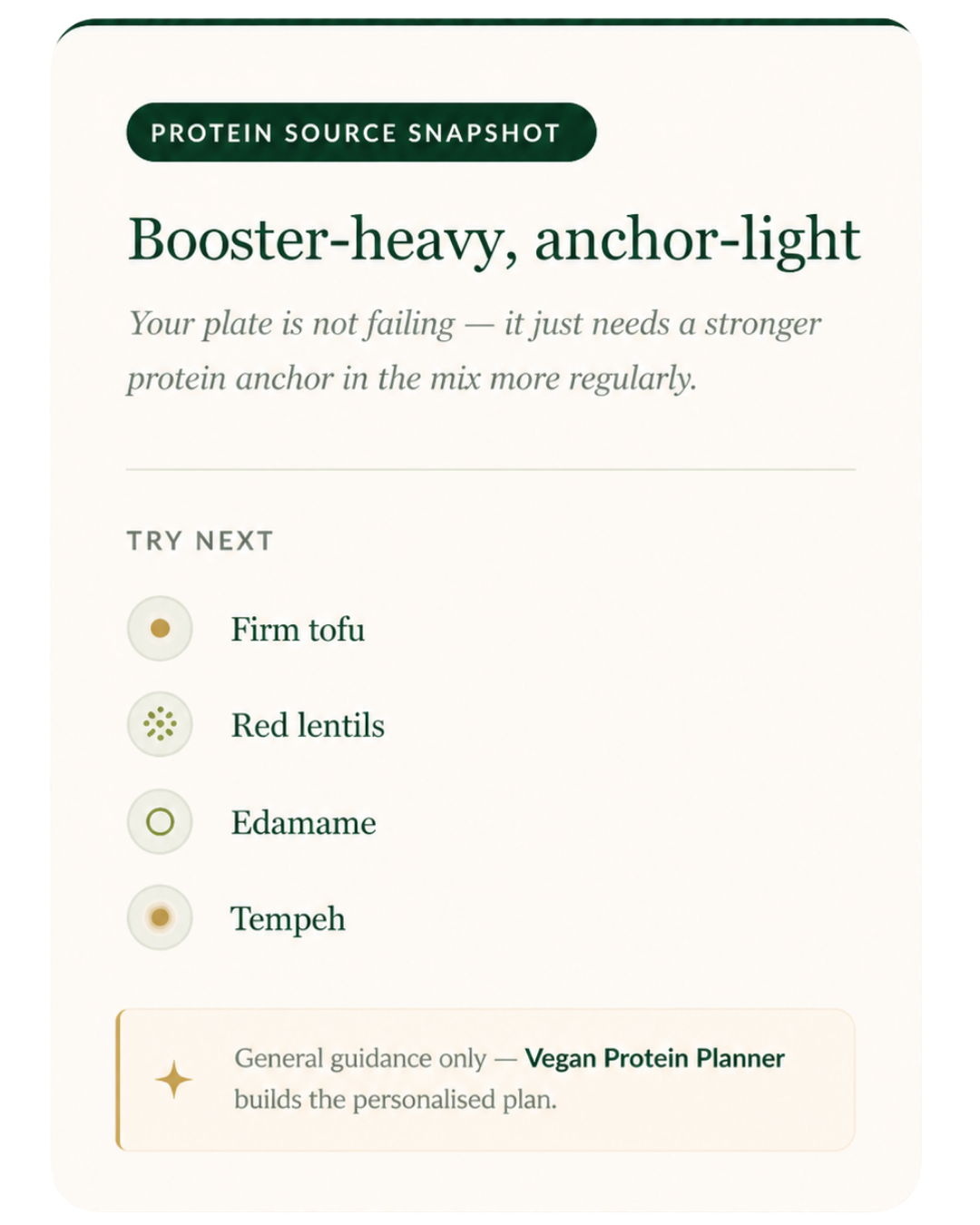
Answer three quick questions and we'll show you your protein source snapshot — plus which foods to add next.
1Which best describes you?
2What do you most want help with?
3Which of these do you already eat? (check all that apply)
Soy-based
Legumes
Grains & Carbs
Seeds, Nuts & Boosters
Other
*Check label — most mycoprotein products (e.g. Quorn) are not vegan.
No signup needed. Runs entirely in your browser.
Plant-based protein guide
What are the best vegan protein sources?
Not all plant-based foods carry the same protein weight. Here's a clear rundown of the heavy hitters and why they belong on your plate.
Soy foods — tofu, tempeh, edamame
Soy is one of the few plant proteins that is naturally complete — meaning it contains all nine essential amino acids. Tempeh edges ahead of tofu in protein density and adds gut-friendly fermentation — tempeh is usually around 19g protein per 100g. Tofu varies by firmness, often around 8–15g protein per 100g. Edamame works beautifully as a snack or meal addition. These are the workhorses of plant-based protein.
Protein anchor
Lentils, chickpeas & beans
Lentils are one of the most affordable and versatile high-protein vegan foods — red, green, or black. Chickpeas and beans (black, kidney, pinto) offer solid protein alongside fibre and complex carbs. A generous portion of cooked lentils can provide 15–18g of protein. Budget-friendly and endlessly adaptable.
Protein anchor
Seitan
Made from wheat gluten, seitan is arguably the highest-protein whole vegan food available — roughly 25g per 100g. It has a firm, chewy texture that works well in stews, stir-fries, and wraps. Not suitable for those with coeliac disease or gluten sensitivity.
Protein anchor · High protein
Quinoa & buckwheat
Two of the rare complete plant protein grains. Quinoa provides around 8g of protein per cooked cup and works as a base, salad grain, or side. Buckwheat — despite the name, not related to wheat — is excellent as porridge, noodles, or flour. Both are naturally gluten-free.
Complete protein grain
Hemp, chia & pumpkin seeds
Hemp seeds are a nutritional overachiever: complete protein, omega-3s, and easy to add to almost anything — and protein-dense at around 31–32g per 100g, though usually eaten in smaller portions as a booster rather than a full protein base. Chia seeds add up when used consistently. Pumpkin seeds are a surprisingly protein-rich snack. Best treated as boosters — valuable additions, not meal centrepieces.
Protein booster
Vegan protein powder
Not essential, but genuinely useful for active individuals or anyone who struggles to hit protein targets through whole foods alone. Most options provide around 20–25g of protein per serving. Pea protein, rice protein, and blended options are all widely available. A convenient, concentrated source — treat it as a tool, not a crutch.
Optional convenience anchor
Quick reference
Vegan protein sources per 100g
Protein amounts vary by brand, preparation, and whether a food is cooked or dry. Use these as practical guide numbers, not exact nutrition labels.
Food
Approx. protein
Best used as
Notes
Seitan
~25g per 100g
Protein anchor
High-protein wheat-based option; not gluten-free.
Tempeh
~19g per 100g
Protein anchor
Firm fermented soy option with strong protein density.
Tofu
~8–15g per 100g
Protein anchor
Protein varies by firmness and brand.
Edamame
~11g per 100g
Protein anchorBooster
Soy-based whole bean option.
Lentils, cooked
~9g per 100g
Protein anchor
Useful base for bowls, soups, and meal prep.
Chickpeas, cooked
~8–9g per 100g
Protein anchorBooster
Good in bowls, salads, hummus, and curries.
Black beans, cooked
~8–9g per 100g
Protein anchor
Useful with grains for complete protein-style meals.
Quinoa, cooked
~4g per 100g
Protein booster
Contains all nine essential amino acids but is not very high protein by volume.
Hemp seeds
~31–32g per 100g
Protein booster
High-protein topping; usually eaten in smaller portions.
Protein values are general estimates based on USDA FoodData Central, common packaged-food nutrition data, and typical cooked serving values. Exact protein amounts vary by brand, preparation method, and serving size. Last reviewed May 2026.
Protein by goal
Best vegan protein sources by goal
Vegan protein sources for gym and muscle gain
Gym-focused users generally need repeatable protein anchors across the day, not just a single high-protein meal. Seitan, tempeh, firm tofu, edamame, lentils, beans, soy milk, and vegan protein powder can all contribute. Convenience matters: foods you can prepare quickly and eat consistently work better than occasional high-protein meals. Vegan Protein Planner helps active users set a daily protein target and build meal blocks around it.
Vegan protein sources for weight loss
Protein can help meals feel more satisfying and reduce the urge to snack between them — without requiring strict calorie counting. Tofu, tempeh, lentils, beans, edamame, soy milk, and protein powder are all practical options to include regularly. The focus here is practical protein planning, not restrictive tracking. This is general guidance only — always consult a qualified professional for personal dietary advice.
Cheap vegan protein sources
Lentils, chickpeas, black beans, canned kidney beans, peanut butter, oats, soy milk, and frozen edamame are among the most budget-friendly protein options, depending on where you shop. Building meals around one or two repeatable budget anchors — like lentils or canned beans — makes consistent protein easier and cheaper. Budget protein works best when planned rather than picked at random.
No-cook vegan protein sources
Useful for busy days when cooking isn't realistic: hummus, canned beans, frozen edamame (thawed), soy milk, peanut butter, hemp seeds, ready-to-eat tofu, and vegan protein powder all require minimal or no preparation. Keeping a few of these on hand makes it easier to hit protein targets consistently, even on days when you don't have time to cook.
Soy-free vegan protein sources
Good soy-free options include lentils, chickpeas, black beans, seitan (if gluten is suitable for you), quinoa, hemp seeds, pumpkin seeds, peanut butter, and pea or rice protein powders. Soy-free users should always check product labels — many packaged vegan foods contain soy-based ingredients even when soy isn't the primary ingredient.
Gluten-free vegan protein sources
Tofu, tempeh, edamame, lentils, beans, chickpeas, quinoa, hemp seeds, soy milk, and most vegan protein powders are naturally gluten-free. If you have coeliac disease or a serious gluten intolerance, always check labels and certifications, as cross-contamination can occur. Seitan is made from wheat gluten and is not gluten-free.
The key concept
Protein anchors vs protein boosters
This is the simplest mindset shift that makes vegan protein click. Once you understand it, building a high-protein plate becomes much more intuitive.
⚓
Protein anchors
The foods that can carry a meal's protein load on their own. Build each main meal around at least one anchor and you're already ahead.
Tofu (firm or extra firm)
Tempeh
Seitan
Lentils
Black beans / chickpeas
Edamame
Vegan protein powder
✨
Protein boosters
Great supporting players — they top up your totals and add nutrition, but they usually shouldn't carry the whole meal's protein alone.
Hemp seeds
Chia seeds
Peanut butter
Tahini
Nutritional yeast
Oats
Nuts & most seeds
Most people who struggle with vegan protein are booster-heavy and anchor-light. The fix is simple: swap one booster-only meal for one that includes an anchor.
Do vegan proteins need to be complete?
Here's the short answer: you don't need to panic about every single meal. Your body pools amino acids across the day, so as long as you're eating a variety of plant-based foods, the pieces add up.
That said, some vegan foods are naturally strong complete-protein options — meaning they contain all nine essential amino acids in one go. These are worth knowing about, especially if you want a simpler approach.
Other plant proteins combine well across the day — think beans and grains, or lentils and rice. You don't need to eat them at the same meal. Just keep them in your regular rotation.
Naturally complete vegan proteins
Soy foods — tofu, tempeh, edamame
Quinoa
Buckwheat
Hemp seeds
Chia seeds
Many vegan protein powders (blended)
Want your full day checked properly? Vegan Protein Planner does the heavy lifting for you.
Common vegan protein mistakes (no shame, just fixes)
These are the patterns that quietly hold people back. All fixable once you spot them.
01
Tiny toppings, big expectations
A sprinkle of hemp seeds is great. But expecting it to make a salad high-protein? That's asking a lot. If your meal doesn't have a protein anchor, the toppings won't save it.
02
Relying on vegetables alone
Yes, broccoli has protein — relative to its calories, actually quite well. But vegetables are not a sufficient primary protein source. They're wonderful, but they need a protein anchor alongside them.
03
Forgetting protein at breakfast
Breakfast is often the meal most likely to skip protein altogether. Toast-only mornings are common. Oats with hemp seeds, soy yoghurt, or a protein shake can make a big difference to daily totals.
04
Thinking one food must do everything
You don't need a single perfect superfood. Vegan protein works best when several good sources stack across the day — anchors at meals, boosters as extras.
05
Obsessive tracking instead of habits
Counting every gram of protein is exhausting and rarely sustainable. A better approach: build repeatable meals with solid protein anchors, and trust the pattern over time.
Ready for the next step?
You've found the sources. Now build the plan.
This free guide helps you compare vegan protein sources. Vegan Protein Planner turns those sources into a personalised daily protein target, meal blocks, and EAA confidence guidance.
This free tool shows you which plant proteins exist and how to think about them. Vegan Protein Planner does the rest: it calculates your personal protein target based on your body and goals, helps you choose a meal style, builds complete plant-protein combos for your day, and gives you a plan you can actually follow — without obsessive tracking.
The highest-protein vegan foods include seitan (around 25g per 100g), tempeh (around 19g), edamame, firm tofu, lentils, chickpeas, and black beans. Hemp seeds punch above their weight too. Vegan protein powders (pea, rice, or blended) also offer a concentrated hit for those who want a convenient option.
Absolutely. Vegans can meet protein needs entirely through plant-based foods. The key is building meals around protein anchors — tofu, tempeh, lentils, beans, edamame, seitan — rather than relying solely on boosters like seeds or nuts. Variety and consistency across the day matter more than any single food.
A complete protein contains all nine essential amino acids in adequate amounts. Soy foods (tofu, tempeh, edamame), quinoa, buckwheat, hemp seeds, chia seeds, and many plant-based protein powders are naturally complete. Other plant proteins can complement each other across the day — you don't need to combine them in a single meal.
Yes — tofu is one of the best vegan protein anchors. Made from soy (a naturally complete protein), firm tofu provides around 10–17g of protein per 100g depending on variety. It's also highly versatile: scrambled, grilled, baked, blended into sauces. Extra firm tofu gives you the most protein per gram.
Together, yes — beans are rich in lysine but lower in methionine, while rice is the opposite. Combined, they cover all essential amino acids. The good news is you don't need to eat them in the same meal. Eating both throughout the day gives your body what it needs.
No — protein powder is a tool, not a requirement. Most people on a balanced plant-based diet can meet their needs through whole foods. That said, it's genuinely useful if you're very active, have higher protein needs, or find it difficult to eat enough whole food protein sources consistently. Think of it as a convenient supplement, not a cornerstone.
The simplest approach: build each main meal around a protein anchor — tofu, tempeh, lentils, beans, edamame, or seitan. Add a booster or two for variety. Don't rely on vegetables as your sole protein source. Repeat consistently. You'll naturally hit much more protein than a booster-only approach, without needing to count a single gram.
A protein source is any food that contains protein. A protein plan takes into account your personal body weight, activity level, meal style, and food preferences to calculate how much protein you actually need and how to hit that consistently across the day. This free tool helps with sources — Vegan Protein Planner builds the full personalised plan.
Seitan is typically the highest at around 25g per 100g, making it one of the most protein-dense whole vegan foods available. Hemp seeds are higher by dry weight (~31–32g per 100g) but are usually consumed in small quantities as a booster rather than a meal centrepiece. Tempeh follows at around 19g per 100g and is one of the best anchor options for most people.
Hitting 100g of protein daily as a vegan is very achievable with the right anchors. The key is building each main meal around a high-protein food — tofu, tempeh, seitan, lentils, beans, edamame, or vegan protein powder — and including a protein source at most meals rather than relying on snacks. Vegan Protein Planner can calculate your specific daily target and show you how to hit it with your preferred foods.
For muscle gain, repeatable protein anchors across the day matter most. Seitan, tempeh, firm tofu, edamame, lentils, beans, soy milk, and vegan protein powder can all contribute effectively. Consistency is key — foods you can prepare quickly and eat regularly work better than occasional high-protein meals. Vegan Protein Planner helps gym-focused users set a daily target and build meal blocks around it.
Protein can help meals feel more satisfying and reduce the urge to snack between them. Tofu, tempeh, lentils, beans, edamame, soy milk, and protein powder are all practical options to include regularly. The focus is practical protein planning rather than restrictive calorie tracking. This is general guidance only — always consult a qualified professional for personal dietary advice.
Lentils, chickpeas, black beans, canned kidney beans, peanut butter, oats, soy milk, and frozen edamame are among the most budget-friendly protein options, depending on where you shop. Building meals around one or two repeatable budget anchors — like lentils or canned beans — keeps consistent protein both easier and cheaper.
Good soy-free options include lentils, chickpeas, black beans, seitan (if gluten is suitable), quinoa, hemp seeds, pumpkin seeds, peanut butter, and pea or rice protein powders. Always check product labels — many packaged vegan foods contain soy-based ingredients even when soy isn't the primary ingredient.
Tofu, tempeh, edamame, lentils, beans, chickpeas, quinoa, hemp seeds, soy milk, and most vegan protein powders are naturally gluten-free. If you have coeliac disease or a serious gluten intolerance, always check labels and certifications, as cross-contamination can occur. Seitan is made from wheat gluten and is not gluten-free.
Vegan Protein Planner is an iOS app that helps vegans, plant-based eaters, and flexitarians plan their daily protein intake. It calculates a personalised protein target based on your body weight, activity level, and goals, and helps you build meal blocks and complete protein combinations. This free guide helps you understand protein sources — the app builds the personalised daily plan around them.
Protein anchors are foods that can carry a meal's protein load on their own — tofu, tempeh, seitan, lentils, beans, edamame. Protein boosters are valuable supporting foods that add protein but usually can't anchor a full meal alone — hemp seeds, chia seeds, peanut butter, oats. Most people who struggle with vegan protein are booster-heavy and anchor-light. Building each main meal around an anchor makes the biggest difference.
Protein needs vary by body size, activity level, age, and goal. Many adults use a baseline of around 0.8g of protein per kg of body weight per day, while active people, people strength training, or people aiming to build or maintain muscle often need more. Vegan Protein Planner helps turn your target into simple plant-based meal blocks without obsessive macro tracking.